javaride.com – Riders often make the same assumption when they first look at Java on a map.
If the distance is short, the day should be light.
Sometimes that works.
Often, it does not.
Because in Java, the road is not just a line between two points. It has pace. It has texture. It has weather, local traffic, surface changes, village rhythm, and the kind of small real-world friction that never fully appears on a planning screen.
That is why some roads ride longer than they look.
Not because the map is useless. Because the map is only the first version of reality.
Maps Flatten the Day
This is the first mistake riders make.
They assume the route shown on a screen carries the same weight as the route under the tires.
It does not.
A map can tell you where the road runs. It can suggest the obvious connection. It can make the day look clean. But it cannot fully show the quality of the surface, how exposed the route feels, how traffic changes the rhythm, or how much focus a rider will actually spend to hold the day together.
That flattening effect is what misleads people.
The road looks shorter than the ride will feel.
What Slows the Road
The reasons are usually not dramatic. They are cumulative.
A single delay rarely changes the whole day. Several small ones do.
Surface Changes the Pace
A smooth section invites confidence. A broken one changes the whole rhythm.
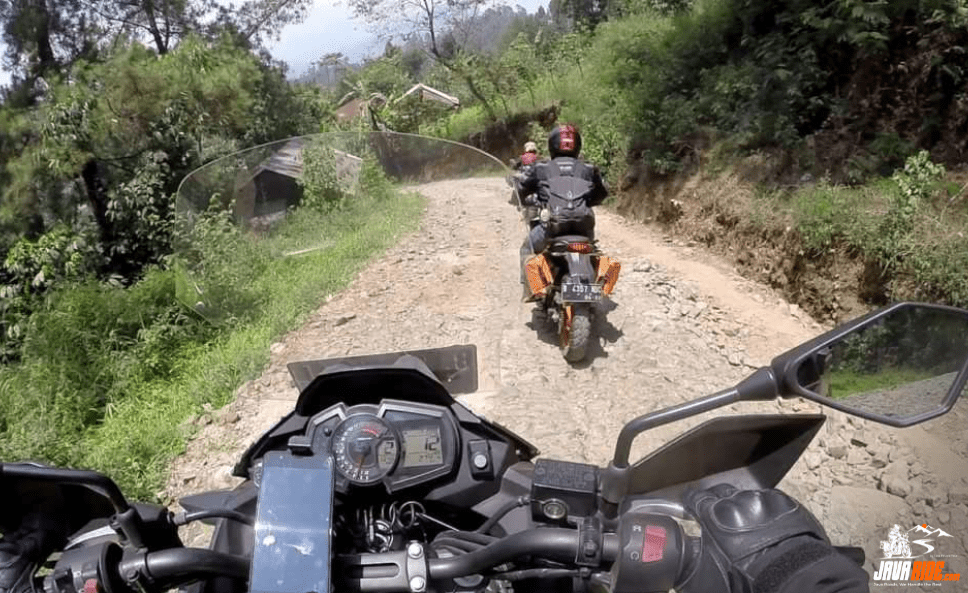
This is one reason short roads start riding long in Java. A route can begin on decent tarmac, then shift into rougher village access, patchwork mountain surface, or narrower lines that ask for more attention and less speed. The rider is still moving, but the day is no longer flowing the same way.
And when that happens in the wrong place inside the route, it starts affecting everything that comes after it.
Villages Change the Rhythm
Village roads are often some of the most rewarding parts of riding Java. They are also where riders most often misjudge pace.
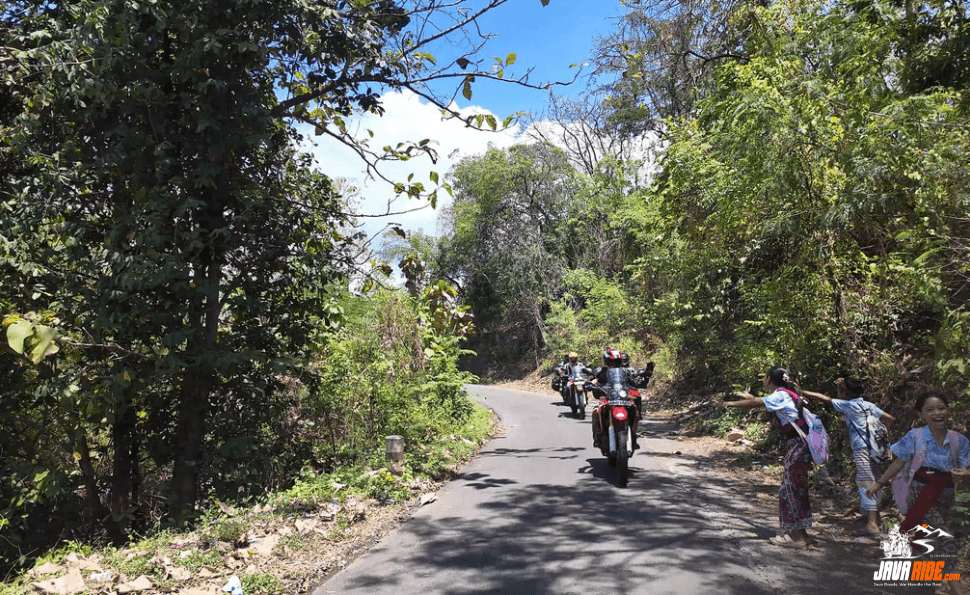
The road may still be open, but the rhythm changes. Local traffic, turns, crossings, slower movement, and the simple fact that these roads belong to lived-in places all shape how the motorcycle moves through them. Riders who plan village sections like they are empty transit roads usually end up arriving later and more tired than expected.
It is not because the route failed.
It is because the route was read without enough reality in it.
Weather Adds Weight
Weather is another reason the island rides differently from how it looks.
A route that feels relaxed in dry, open conditions can slow immediately once mist, rain, or damp surface begins shaping the pace. Visibility drops. Traction changes. Rider effort rises. Small sections start asking more from the body and mind than they did an hour earlier.
This is where Java often surprises visiting riders.
The distance has not changed. The map has not changed. But the weight of the day has changed, and that weight is what riders actually feel.
That is why route judgment in Java is not just about where the road goes. It is about how the road behaves once the conditions begin moving around it.
Route Judgment Saves Energy
This is where local knowledge stops being a bonus and starts becoming structure.
Good route judgment is not about proving a road is possible. It is about understanding what that road costs in time, energy, focus, and momentum. A smarter route may not always look more impressive on a screen, but it often produces the better day on the ground.
That matters even more in private touring, where the route can be matched properly to the rider, the bike, the weather, and the experience people actually came for. Once the line is judged with those things in mind, the island stops feeling unpredictable in the wrong way. It starts feeling rich instead.
Because in Java, some roads ride longer than they look.
And the riders who enjoy the island most are usually the ones who know that before the day begins.
So, if you’re ready to ride Java with routes that make sense on the ground, not just on a map, head over to our contact page and let’s start planning your route. Or you can simply CLICK THIS LINK to chat with us on WhatsApp. With JavaRide, you’re not just getting a bike and a route — you’re getting fifteen years of local knowledge behind every mile. See you on the road!